
Filters

Changing any of the form inputs will cause the list of events to refresh with the filtered results.

  • Asst. Professor Benjamin Schwessinger – ‘Pest monitoring in the ANBG’

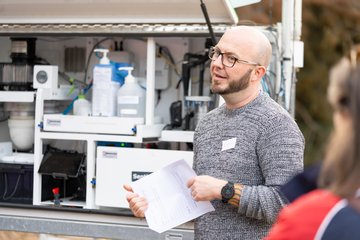
    Benjamin, from the ANU Research School of Biology, will describe how they catch fungal spores from the air for plant pathogen diagnostics, and their outreach to the public and schools highlighting biodiversity. Fungi including serious plant pathogens surround us. Benjamin will discuss recent technological advances that enable the smart capture of fungal spores from air […]

  • Dr Luke Keogh – ‘Museum Collections and Australia’s Gardens’

    Luke, inaugural White Family Senior Fellow in Australian Garden History at NMA, will showcase some of the objects and stories he has uncovered in his work with museums that have significance and connections that are not always fully represented and interpreted. Garden objects, ephemera and stories are well-represented in Australian museum collections, though their significance […]

  • Plant Recognition Group – Getting to know your daisies

    The next Plant Recognition Group workshop will focus on the family Asteraceae (daisies). The workshop will be led by Dr Alexander Schmidt-Lebuhn, Research Scientist with CSIRO, who will provide a powerpoint presentation on Asteraceae identification and show selected samples. Binocular microscopes and other aids for identification will be available for the workshop. When: Thursday 20 March, […]

  • Cameras and Café Walk

    The next Friends of ANBG Photographic Group Cameras and Café walk will be held on Saturday 22 March. We meet at the bus stop at 8.40 am, then follow our interests and instincts around the Gardens. Regroup for a refreshment and conversation at Pollen Cafe at around 10.30 am. At least one member of the Friends of […]

  • Brad Opdyke – ‘Paleoclimate records and stratigraphy from Lake George: what we can learn about climate change and our future’

    Brad will discuss the sedimentary record of Lake George going back almost 4 million years. Pollen records indicate much greater rainfall in the past. Records of lake-levels date from 1820, and are relevant to climate change.  Four million years ago atmospheric CO2 levels were close to those we have in 2024. Pollen records indicate that […]

  • Photographic Group March meeting – Where art helps science

    Dr Michael Mulvaney, the administrator of the citizen science Naturemapr platforms, will address the monthly meeting of the Photographic Group. His topic will be Where art helps science - Nature Photography and citizen science. The talk will emphasise and explain, by way of examples, the valuable contribution that good nature photographers can make to our […]